
Blog
R-410A vs R-454B vs R-32: Which Refrigerant Do You Need ?

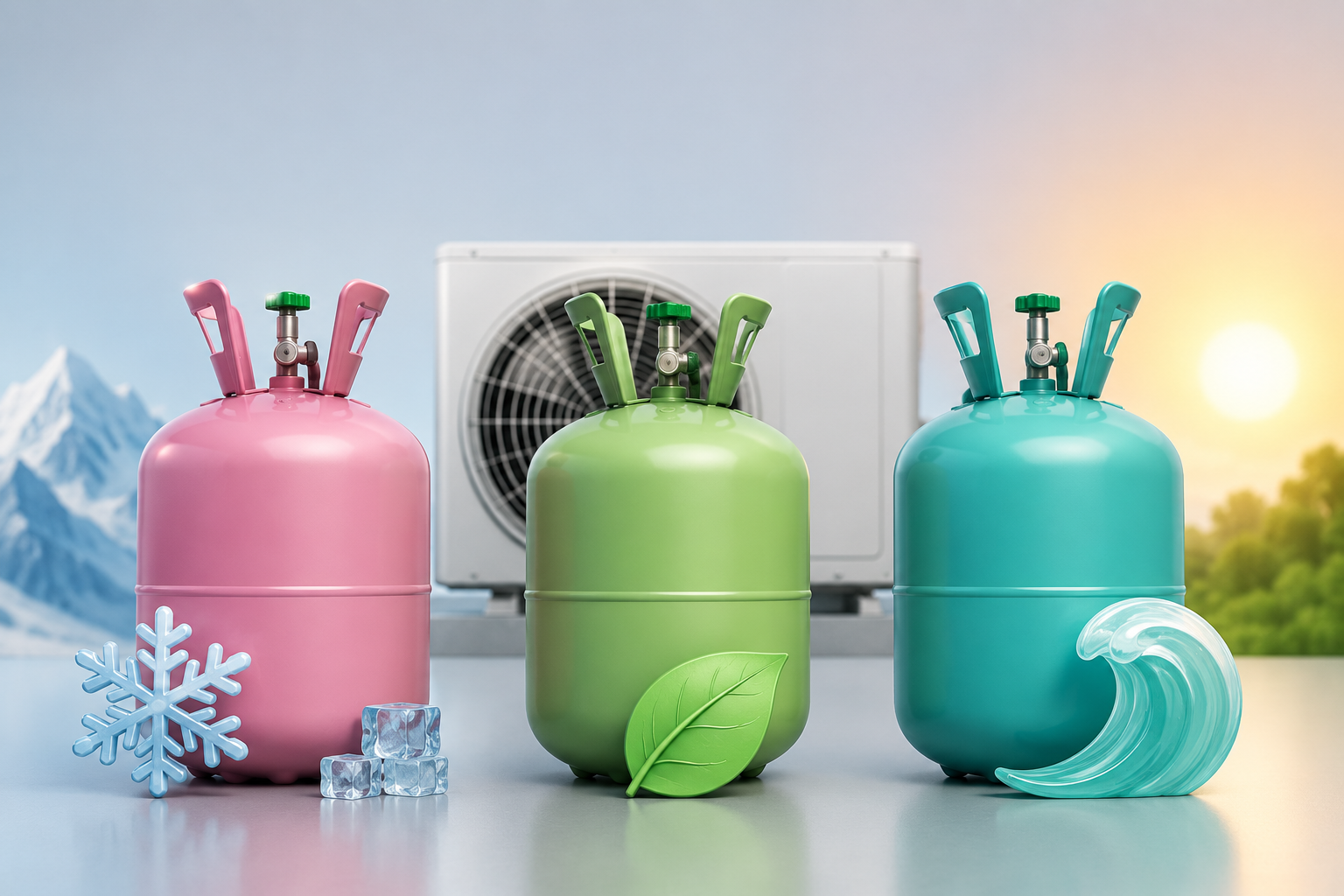
R-410A vs R-454B vs R-32: Which Refrigerant Do You Need in 2026?
R-410A is no longer used in new AC equipment as of January 1, 2025. If you’re buying, servicing, or stocking refrigerant in 2026, here’s everything you need to know about R-410A, R-454B, and R-32 — in plain English.
📋 Table of Contents
1. What Changed in 2025 — and Why It Matters
On January 1, 2025, the U.S. EPA’s AIM Act regulations took effect, banning R-410A from use in newly manufactured residential and light commercial air conditioning equipment. The reason: R-410A has a Global Warming Potential (GWP) of approximately 2,088 — over 2,000 times more damaging than carbon dioxide if released into the atmosphere.
This doesn’t mean your existing R-410A system is illegal or that you have to replace it. Existing R-410A systems remain fully legal to operate and service indefinitely. You can still buy R-410A refrigerant for repairs. But any brand-new AC unit, heat pump, or mini-split manufactured after January 1, 2025 must use a lower-GWP alternative — primarily R-454B or R-32.
ℹ️ Important Clarification
R-410A is not banned for service use. If you have an existing R-410A system, you can still top it off, repair leaks, and service it normally. The ban only applies to new equipment manufacturing.
2. The Three Refrigerants You Need to Know
If you’re a homeowner, HVAC technician, or contractor navigating the market in 2026, these are the three refrigerants you’ll encounter most:
R-410A
The old standard. Still used for servicing existing systems. No longer in new equipment. GWP: ~2,088.
R-454B
The new standard for ducted AC systems. Chosen by Carrier, Trane, Lennox, Goodman & Rheem. GWP: ~466.
R-32
The preferred refrigerant for mini-splits. Used by Daikin, LG, Fujitsu & Panasonic. GWP: ~675.
3. Side-by-Side Comparison Table
| Property | R-410A | R-454B | R-32 |
|---|---|---|---|
| GWP (Global Warming Potential) | ~2,088 | ~466 | ~675 |
| Flammability | A1 (Non-flammable) | A2L (Mildly flammable) | A2L (Mildly flammable) |
| Allowed in New Equipment? | ❌ No (since Jan 2025) | ✅ Yes | ✅ Yes |
| Used For | Servicing existing systems | New ducted AC & heat pumps | New mini-splits & ductless |
| Major Brands | Legacy systems (pre-2025) | Carrier, Trane, Lennox, Goodman, Rheem | Daikin, LG, Fujitsu, Panasonic |
| Drop-in Replacement? | — | ❌ Not for R-410A | ❌ Not for R-410A |
| EPA Certified Handling Required? | Yes — Section 608 | Yes — Section 608 | Yes — Section 608 |
| Long-Term Availability | Tightening, prices rising | Widely available | Widely available |
4. R-410A: Still Legal, But Fading Fast
R-410A was the dominant refrigerant in U.S. residential AC systems for over two decades. It’s efficient, widely understood by technicians, and non-flammable — making it easy to handle and service. Millions of existing systems still run on it, and they will continue to do so for many years to come.
The challenge in 2026 is supply and cost. As production of new R-410A winds down globally, wholesale prices have been climbing steadily. Contractors are reporting significantly higher prices per cylinder compared to just a few years ago, and those costs are being passed on to homeowners during service calls.
⚠️ Don’t Try to Substitute
R-454B and R-32 are not drop-in replacements for R-410A. Using them in an R-410A system can damage the compressor, seals, and oil, and will void any warranty. Always use the refrigerant specified on your system’s nameplate.
Who still needs R-410A?
- Homeowners and technicians servicing existing pre-2025 AC systems
- Contractors topping off or repairing R-410A units still under warranty
- Property managers maintaining large fleets of older HVAC equipment
5. R-454B: The New Standard for Ducted Systems
R-454B — sold under the trade name Puron Advance by Chemours and Solstice 454B by Honeywell — is the refrigerant that most major U.S. HVAC manufacturers have chosen for their new ducted central air conditioning and heat pump systems. Carrier, Trane, Lennox, Goodman, Rheem, York, and American Standard have all transitioned their new product lines to R-454B.
Why R-454B? It was engineered to operate at similar pressures to R-410A, making the transition easier for manufacturers who didn’t have to redesign every component from scratch. For homeowners, this means new R-454B systems work the same way as the R-410A system they’re replacing — just with dramatically lower environmental impact.
Key facts about R-454B:
- GWP of approximately 466 — about 78% lower than R-410A
- Classified as A2L (mildly flammable) — requires trained, certified technicians
- Pressures are close to R-410A, making it a practical industry transition
- Standard for new ducted residential and light commercial systems in the U.S.
6. R-32: The Mini-Split Favorite
R-32 is a single-component refrigerant that has been the global standard for mini-split and ductless systems for years, used extensively in Europe and Asia long before the U.S. transition. In 2026, brands like Daikin, LG, Fujitsu, and Panasonic use R-32 in their mini-split lineups.
R-32 has a GWP of approximately 675 — higher than R-454B but still about two-thirds lower than R-410A. Its main advantage is that it’s a single-component refrigerant (not a blend), which means it doesn’t fractionate during leaks and is generally simpler to work with from a service standpoint. It also delivers slightly better thermodynamic efficiency in heat pump applications.
Key facts about R-32:
- GWP of approximately 675
- Classified as A2L (mildly flammable)
- Preferred refrigerant for ductless mini-split systems
- Single-component — simpler to service than blended refrigerants
- Dominant in global markets; well-proven track record internationally
7. Which Refrigerant Do You Actually Need?
The answer is simpler than it might seem — your system decides for you. Never choose a refrigerant based on preference or price alone. Always use the refrigerant specified on your system’s data plate or in the owner’s manual.
| Your Situation | Refrigerant You Need |
|---|---|
| Servicing or topping off an existing central AC or heat pump (manufactured before 2025) | R-410A |
| Installing or servicing a new Carrier, Trane, Lennox, Goodman, or Rheem unit (2025 or newer) | R-454B |
| Installing or servicing a new Daikin, LG, Fujitsu, or Panasonic mini-split (2025 or newer) | R-32 |
| Buying refrigerant to stock for general HVAC service work on older systems | R-410A |
✅ Bottom Line
If you have an existing system: use R-410A. If you’re buying a new ducted system: it will use R-454B. If you’re buying a new mini-split: it will likely use R-32. You don’t choose the refrigerant — the equipment does. And all three require EPA Section 608 certification to purchase and handle.
8. Where to Buy Genuine Refrigerant
Buying refrigerant from a trusted, authorized source matters. Counterfeit or mislabeled refrigerant cylinders are a real problem in the industry — they can contaminate your system, cause equipment failure, and create safety hazards. At Ovreal, we stock genuine, brand-authentic refrigerant from the most trusted names in the industry including Chemours, Honeywell, and Daikin — sourced directly from authorized distributors and shipped free to your door across the United States.
- ✅ 100% genuine — sourced from authorized distributors
- ✅ Original manufacturer packaging with traceable GTINs
- ✅ Free shipping on all U.S. orders
- ✅ R-410A, R-454B, R-32, and more in stock
Shop Genuine Refrigerant at Ovreal
R-410A, R-454B, R-32, and more — authentic brands, free U.S. shipping, delivered to your door.
Browse Refrigerants →